
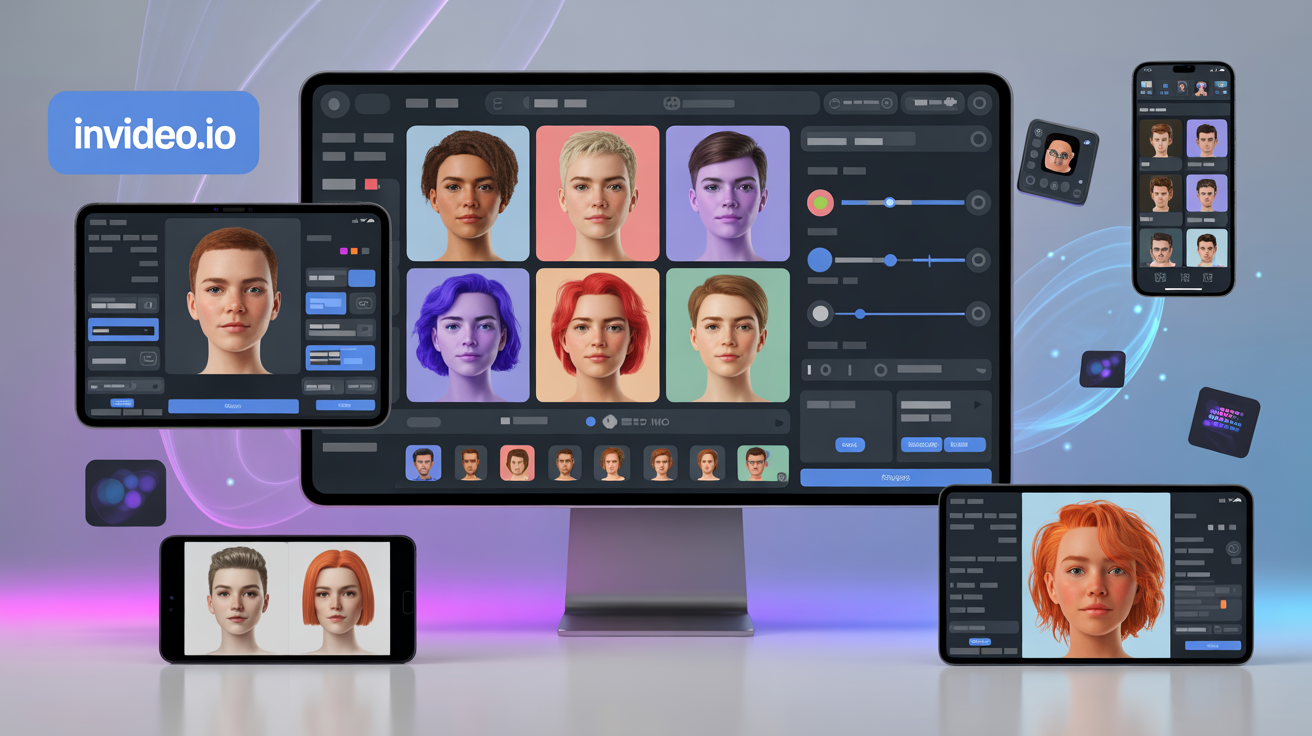
Digital avatars used to belong to gaming forums and science fiction — today they’re part of how creators, brands, educators, and everyday people present themselves online. Whether you want a stylized portrait for social media, a lifelike talking head for training videos, or a full-body 3D character for games and the metaverse, AI avatar makers let you create a “digital you” faster than ever. In this guide you’ll learn what an ai avatar maker does, why creators use them, and — most importantly — five of the best tools to try (with Invideo at #1, per your request). Each tool below uses the same format so you can compare quickly.
What is an AI Avatar Maker
An ai avatar maker is a tool that transforms photos, short videos, or text prompts into an illustrated, 2D, or 3D representation of a person (or character). Modern tools can generate stylized portraits, photorealistic avatars, animated talking heads, or full-rigged 3D characters that work in games and virtual spaces. Creators use them for profile pictures, faceless videos, virtual influencers, explainer videos, training materials, and immersive experiences — often saving hours compared with manual design and rigging.
1) Invideo — AI Avatar Maker
Overview: Invideo’s ai avatar maker enables you to create talking-head avatars from a short video or YouTube link, and add voiceovers (including voice cloning), making it a practical entry point for creators who want quick, polished avatar-led video content.
Best for: Marketers, social creators, and small teams who want fast talking-head videos and simple localization (multi-language voice options).
Key Features:
- Create an AI talking avatar from video uploads or links.
- Built-in voice cloning and multi-lingual voice options.
- Ready-made workflows for ads, explainers, and UGC-style clips.
- Export-ready videos with lip-sync and scene editing.
How to get started: Sign up on Invideo, upload a short clip or a selfie video to generate your avatar, choose a voice or upload your own, and export. The interface focuses on speed: minimal setup, then edit.
Price / Notes: Invideo offers a freemium model and paid tiers; some avatar features may require a subscription. Invideo is also described on their site under the simpler banner of a free ai video app for basic trial use.
2) Ready Player Me
Overview: Ready Player Me builds cross-platform full-body 3D avatars from a selfie. Its strength is avatar portability — the avatars can be exported to many VR/AR/social apps and games.
Best for: Developers, VR/AR creators, gamers, and anyone who needs a 3D avatar that can move between apps and game engines.
Key Features:
- Full-body 3D avatar generation from a single selfie.
- Vast customization options (hair, clothes, proportions).
- Strong interoperability — avatars work in many supported apps and game engines.
- Developer SDKs and avatar portability features for integrations.
How to get started: Visit Ready Player Me, take or upload a selfie, customize appearance, then download or connect the avatar to supported apps. Developers can embed Ready Player Me avatars via SDKs.
Price / Notes: Free for personal creation with options for paid enterprise/developer plans depending on scale and integration needs.
readyplayer.me
3) Artbreeder
Overview: Artbreeder blends images using generative models; it’s excellent for creating stylized or surreal portraits by “mixing” visual genes from multiple images. The emphasis is on creative control and exploration rather than plug-and-play talking avatars.
Best for: Artists, character designers, authors, and creators who want to iterate rapidly on avatar concepts and unusual visual styles.
Key Features:
- “Mix” and branch images using sliders (genes) to alter style and features.
- Combine multiple source images to evolve unique characters.
- Export images for use as profile avatars, concept art, or to seed other tools.
How to get started: Create an account, start with existing images or uploaded photos, and use the splicer/composer tools to evolve your avatar. Export high-resolution images for social or production use.
Price / Notes: Offers free tier with limitations; paid plans unlock higher-resolution downloads and more generations. Great for visual experimentation but not focused on animated talking avatars.
4) Lensa (Magic Avatars)
Overview: Lensa’s “Magic Avatars” feature turns your photos into polished, stylized avatars across art styles. It’s mobile-first, widely used for social-profile-ready avatar sets, and often produces vibrant, shareable results.
Best for: Social users and influencers who want trend-driven, high-quality portrait avatars to use across profiles and marketing assets.
Key Features:
- Generate multiple stylized avatars from a photo set.
- Variety of art styles (fantasy, anime, cinematic).
- Quick mobile workflow — designed for phones with in-app purchases and packages.
How to get started: Download Lensa on mobile, follow the “Magic Avatars” workflow (upload a set of photos), choose art styles, and create your avatar pack.
Google Play
Price / Notes: Lensa often uses a trial / one-time pack purchase model for avatar sets; note that the app has previously sparked discussion about privacy and generated-content concerns — something to consider when uploading sensitive images.
5) Reallusion Character Creator (CC)
Overview: Character Creator is a professional-grade 3D character design tool for creating realistic or stylized 3D humans for animation and game engines. It’s a deeper, more technical option for producers who need rigged, exportable characters.
Best for: 3D artists, animators, game developers, and studios that need high-fidelity, rigged characters for professional pipelines.
Key Features:
- Advanced shape and skin generators with facial rigging.
- Integration with iClone, Unreal Engine, Unity, and popular 3D tools.
- Full control over hair, clothing, morphs, and animation-ready export.
How to get started: Download a trial of Character Creator, import photos or start from base models, sculpt and customize, then export to your target engine or pipeline. Expect a steeper learning curve than consumer apps.
Price / Notes: Professional tool with trial and paid licenses. Best when you need production-ready 3D characters rather than quick social avatars.
Choosing the Right Tool for You — A Short Checklist
- Want fast talking-head videos and templates? Start with Invideo.
- Need cross-app 3D avatars for VR/AR? Ready Player Me is built for portability.
- Want creative, experimental portraits? Artbreeder is ideal.
- Looking for shareable, stylized profile images from your phone? Try Lensa.
- Building polished 3D characters for production? Use Reallusion Character Creator.
Tips for Making An Avatar That Feels Like You
- Use multiple high-quality reference photos (where required) to give the model consistent facial cues.
- Pick an art style that matches your purpose — realistic for professional videos, stylized for social or branding.
- Pay attention to lighting and clothing in source photos to improve output quality.
- Check privacy and licensing: read the tool’s terms before uploading sensitive photos.
Final thoughts
Creating a digital you is no longer niche — it’s a mainstream creative practice. Whether you want a quick social avatar, a talking AI presenter, or a frictionless 3D character for the metaverse, there’s a tool that fits your needs. Start small, experiment with a couple of generators, and then decide which pipeline suits your workflow and privacy comfort level.
Would you like a side-by-side comparison table (features, pricing, output types) for these five tools to help pick one faster? I can generate that next.